


WEEK 3: Making sense of the first half of... Network Sense: Methods for Visualizing a Discipline by Derek N. Mueller
In the early chapters of Network Sense, Mueller (2017) makes the case that Rhetoric Composition/Writing Studies (RCWS) as a discipline has been expanding, particularly from the specific (and debatable) point in 1987 when attempts at organizing the field of rhetoric first gained real traction, at rates which make it near impossible for individuals within the discipline to get a true sense of its development and scope. The tools of Distant Reading and Thin Description can be useful, Mueller contends, in this regard.
Mueller foregrounds his approach by highlighting (and magnifying) some formative points in RCWS:
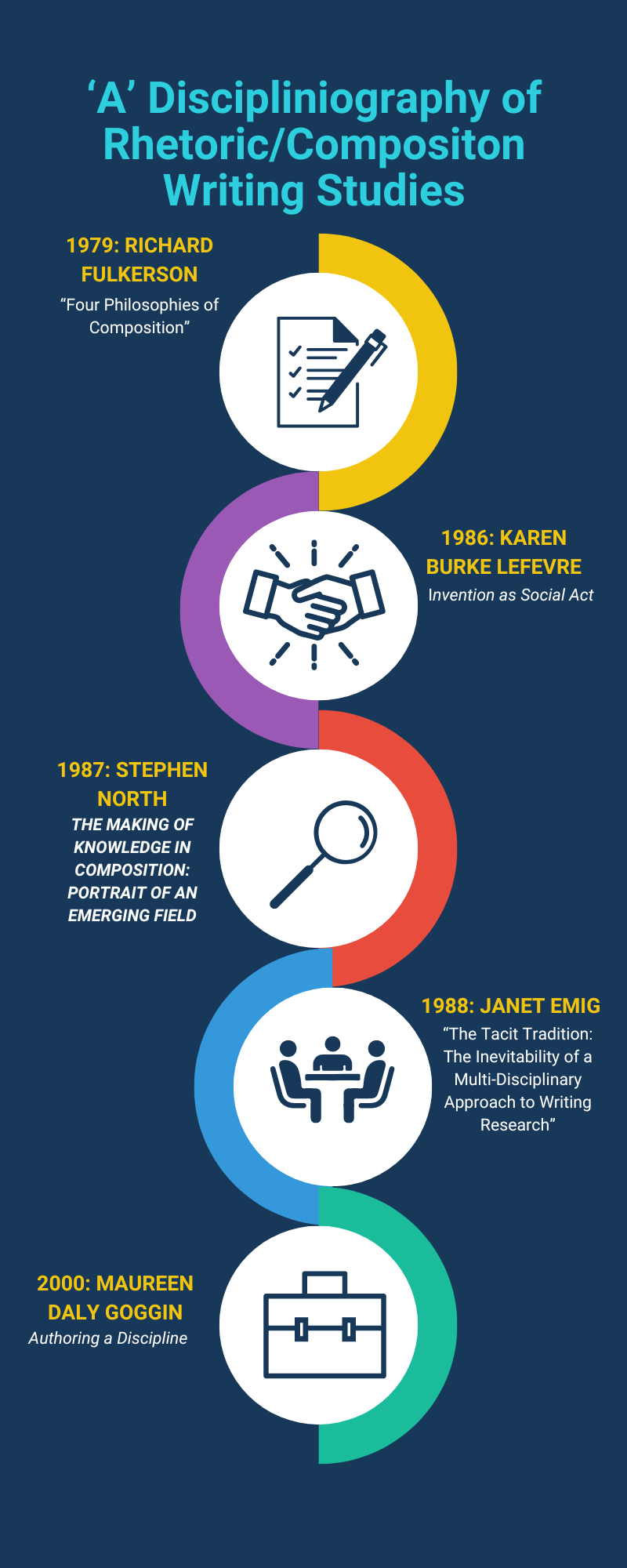
Mueller points out several reasons why current approaches to investigating the the field are limited and flaneur-like in scale. Imagine behind each panel below, an infinite number of possibilities:

ONE POSSIBLE APPROACH? Taking a planeur perspective, using a combination of Distant Reading and Thin Descriptions.


My Response in Words
As a newcomer to the field of rhetoric at this level, I often feel overwhelmed about what I should read and the time I need to read it or what I need to know about the past practices, current trends and the future of writing. What theories must I master? What concepts should I challenge? Mueller identifies newcomers to the field as one of several specific groups that can potentially benefit from the combined approach of distant reading and thin description, and the visualized rhetoric they create. Such rhetoric not only can assist with the examination of trends, foci and general directions of the field, but also make suggestions relating to gaps in the field for further research. I certainly can see the appeal of this approach and how it can also lead to an always expanding examination of whatever is revealed through the process, much like the unstacking of a matryoshka doll.
My Response in a Word Cloud


I love the infographics you've created here, Monique. You're going to have to show me how you did them. Jennifer